HOLIDAY CAMP · SEP–DEC 2026 · AGES 8–11
Five days of Scratch. One game from a blank screen.
In-person at Orchard Road · From $570
REAL FOUNDATIONS
Most Scratch camps teach one project. We teach the foundation.
An afternoon of Scratch on YouTube can produce one cool game. It doesn't make a coder. The difference is whether your child can sit down with an empty screen and know what to do next.
Coding Fundamentals is the week we use to build that. Sequencing, loops, variables, conditionals, events. The same concepts your child will type in Python at 12 and use for years. They learn them as blocks first, in projects they actually want to make.
5 DAYS · AGES 8–11 · LAPTOPS PROVIDED
THE WEEK
What they build each day.
Sprites, motion, looks, sound. They build their first short animation by the end of the morning: a character moving across a stage they designed. Step one of every project from here on.
Loops to repeat without dragging the same block ten times. Variables to count points, lives, levels. They build a small game that uses both, and start understanding the words they'll keep using forever.
If this happens, then that. Click the sprite, lose a life. Touch the goal, win the level. They wire up the logic that turns animations into actual games.
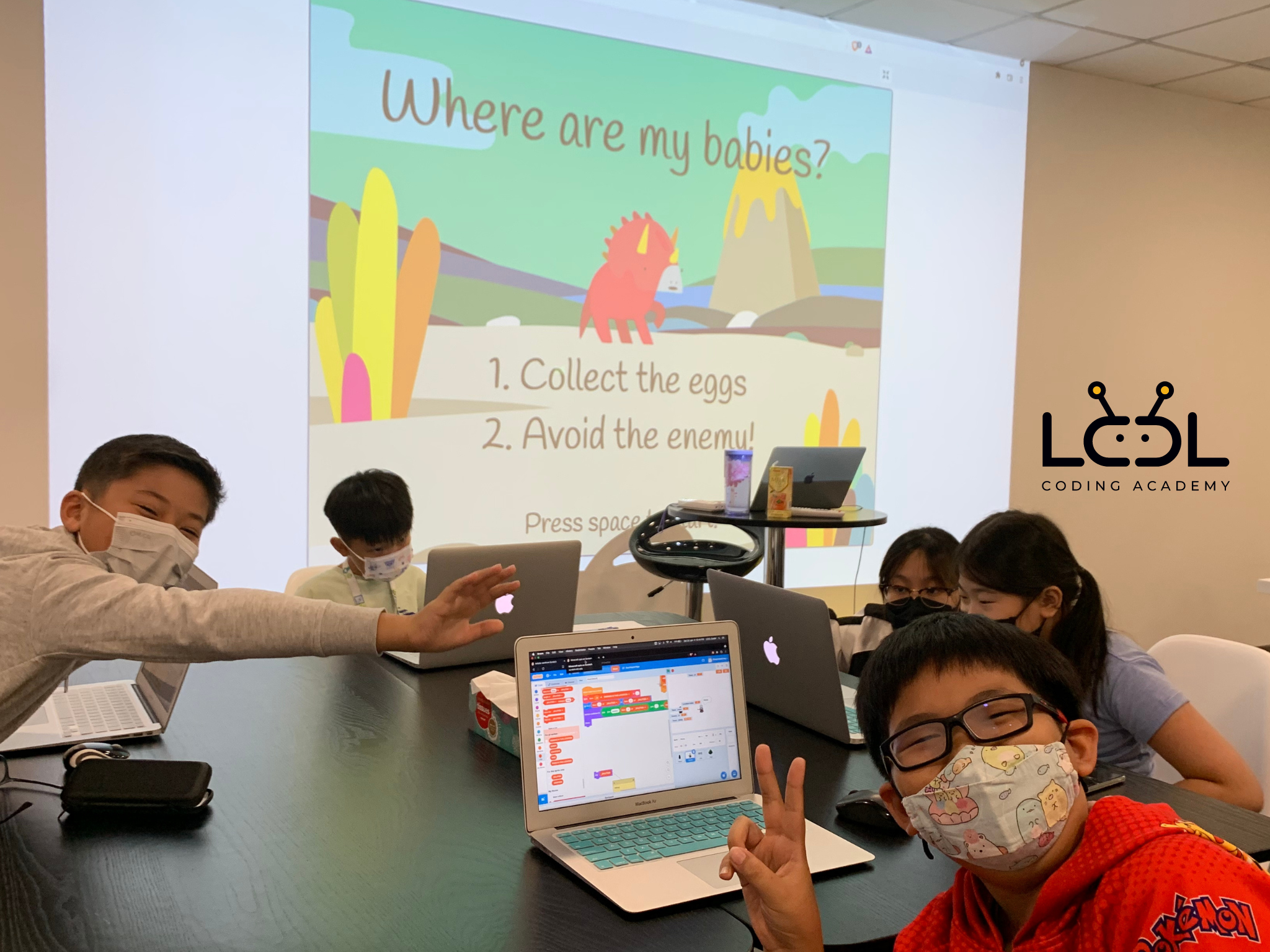
Blank screen. Pencil first, then code. They sketch a game they want to make, plan the sprites and rules, then start building. The rest of the week is theirs to spend on it.
They polish, debug, and present their game to the class. Friends play it. Friends find bugs. They fix them on the spot. Then they go home with the file, a level certificate, and a clear recommendation for what to learn next.
WHAT PARENTS ASK
"My child has done Scratch before. Will they be bored?"
No. We assess on Day 1 and place each child at the right starting level. Returning students start in our intermediate Scratch curriculum (variables, conditionals, lists). The 1:6 ratio means we can pace each child individually.
"Why Scratch and not Python?"
Because the concepts matter more than the language. A child who understands variables, loops, and conditionals in Scratch picks up Python in weeks at age 12. A child who's typed Python without that foundation is faster on the surface and slower underneath.
"Do I need to bring a laptop?"
No. We provide laptops, software, and all materials. Send a labelled water bottle. Earphones welcome but not required.
"What's next if my child loves it?"
Our regular Saturday Coding Fundamentals programme picks up where the camp leaves off. The Day 5 recommendation will tell you exactly which level to start at. Python opens at 12.
"What's the cancellation policy?"
No cash refunds. You can reschedule to another camp week in the same holiday season, subject to seat availability. Bookings are non-transferable to another family. If your child misses a day, they can replace it during another week of the same camp. See our Terms of Sale.
They come home with five projects and a game they invented.
Four to six saved Scratch projects. One original game they designed from a blank screen. A level certificate. And a clear, written recommendation for what to learn next: Saturday term programme, level, and start date.
SEP–DEC 2026 HOLIDAYS
Coding Fundamentals Camp
Same programme, every week. Pick the week that works for your family.
15 HOURS TEACHER-LED · 4–6 PROJECTS SAVED · 1 SHOWCASE PRESENTATION
"Wait, I want to add another level."
They'll ask to keep building after pickup. That's the camp working.
SEP–DEC 2026 HOLIDAYS · MON–FRI · 2:30 PM–5:30 PM
FLOOR 13 · 583 ORCHARD ROAD · SINGAPORE 238884
FOR YOUNGER SIBLINGS (5–7)
Early Creators
Their first taste of code, dragging blocks instead of typing. Same afternoon slot, runs concurrently.
See the programme →